Home > Knowledge > Airport > Reclaim on demand: new opportunities in an underdeveloped area

Reclaim on demand: new opportunities in an underdeveloped area

Airport innovation continues to develop, centred around operational needs, passenger stressors and rethinking the use of existing technology flows. Developments have helped or are in testing processes with commonly faced passenger worries, such as security and baggage drop. 

Article summary

  • Airports are addressing passenger stress in the baggage reclaim hall, where there is no clear system, crowding around carousels, limited or outdated information, and concerns about baggage safety.
  • Reclaim on demand allows passengers to claim luggage from individual booths by scanning identification and “pulling” baggage from an automated reclaim system, where baggage supply is triggered and presented securely.
  • The system is enabled through a sortation process using an ICS tote-system combined with Dynamic Bag Storage (DBS) to store, route and deliver arrival baggage based on defined parameters.
  • Reclaim on demand can be integrated as a premium service, for business travel, or for bulky and oversized baggage, and can be extended beyond the reclaim hall to locations such as an airport train station or car rental area.
  • When each bag is tracked through storage, routing and final collection, reclaim on demand can reduce the number of inbound bags that are misplaced, mishandled or wrongly taken, while improving flow and reducing the crowded feeling in the reclaim hall.

Now, airports are turning to the next challenge that passengers report cause significant stress: baggage reclaim. When passengers disembark a plane, make their way through the relevant passport or border controls, they find the baggage reclaim hall an area of chaos. There is no clear system, people are crowding around the carousels, there is often outdated or limited information about when baggage is expected to arrive, and passengers are concerned about the safety of their baggage.

Often, mishandled baggage is not a result of the baggage being left at the departure airport, but in many cases it has arrived at the destination airport, and is in the same location as the passenger. The difficulty is that the baggage has failed to make it to the reclaim hall. However, the passenger cannot know this and only know the anxiety and uncertainty of needing to spend time resolving the situation.

Although this is commonly seen by airports as a cost centre tied to operational constraints due to its reliance on upstream baggage systems, there is a way for rethinking baggage reclaim opportunities so they become a positive add-on for airports. Reclaim on demand does exactly this, providing a premium design to cater for a different passenger experience in the reclaim area.

How does reclaim on demand work?

In new baggage flow models, reclaim on demand provides passengers with the opportunity to claim their luggage from individual booths by ‘pulling’ it from the automated reclaim system. Once passengers arrive in the reclaim hall, they will head to a booth which is indicated digitally, and then scan with relevant identification. On successful identification, baggage supply will be triggered and the booth will open and present their luggage.

Passengers can be certain that their luggage will not be taken by the wrong person, it is completely secure until they choose to collect it, and the discomfort that comes from the lack of knowledge about where the luggage is can be removed from the situation.

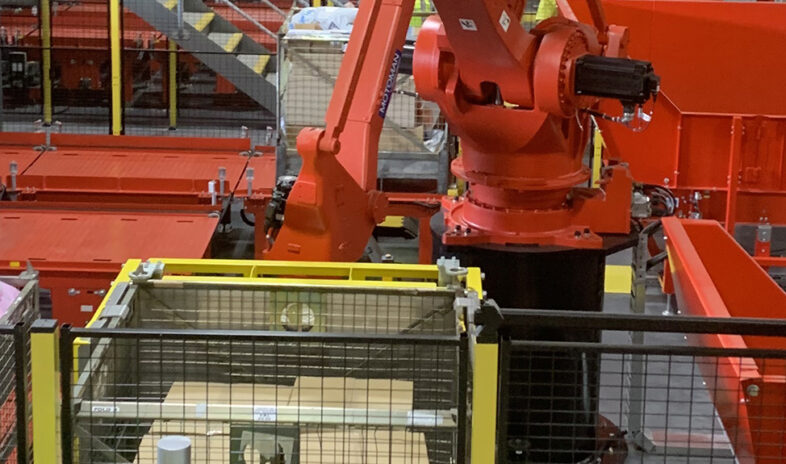
On the operational side, reclaim on demand is possible through a sortation process for the arrival baggage. The arrival luggage needs to be stored, held, and delivered based on parameters that are defined by the passenger and the airport. This integration occurs through an ICS tote-system which is combined with a Dynamic Bag Storage (DBS), as this combination can route and store the tote accordingly. While there are other ways in which smaller airports could do this with a separated system, there would need to be both a sortation system and a storage system.

Different options for integrating reclaim on demand

As this is a new concept for airports, there are a variety of ways in which it can be integrated depending on an individual airport, the airlines it services, and the type of flights and passengers it regularly services. While reclaim on demand will never replace an entire baggage hall, it can be a valuable add-on service for passengers who want or require a different experience.

One example of this is offering it as a premium service, which may be linked to first class or business class passengers. These passengers could receive this service by default, as a result of their ticket type, and be offered to skip the crowd. Framing reclaim on demand as a luxury add-on is likely to elevate the airport experience for those involved.

In a similar vein, reclaim on demand could prove a valuable option for business travel. When a passenger is travelling for work, they could have the option to work from an airport lounge until they need to leave the airport. In this scenario, their luggage would be held until they chose to collect it, presumably just before they left the airport. This would allow them to focus on finalising their presentation or other work and then collect their luggage as needed, rather than having to collect their luggage, exit the airport and then find somewhere to work from.

Another option is that reclaim on demand could be used for bulky and oversized baggage. This could provide a better option for passengers who have different travel requirements, for example families or individuals requiring wheelchairs, car seats or buggies. As the safe transport of these items generally causes concern, this would ease passengers minds, while also removing some of the most stressful factors from the original carousels to improve the overall experience for passengers.

There is also an option to add the reclaim on demand service beyond the actual reclaim hall as the ICS system can be extended. Passengers could then have the opportunity to choose to collect their luggage from the airport train station, for example, or from the car rental area. This would alleviate some of the pressure in the baggage reclaim area, while also allowing passengers a smoother flow through the airport.

Reclaim on demand offers benefits for both passengers and airports

As airports are constantly seeking to improve the passenger experience while utilising their existing footprint as much as possible, reclaim on demand offers an opportunity in both of these areas. When each bag can be tracked through storage, routing and final collection, reclaim on demand can reduce the number of inbound bags that are misplaced, mishandled or wrongly taken from the reclaim area. Even when an issue occurs, the airport has a clearer record of where the bag was last handled, which makes resolution faster and more transparent.

There is often limited opportunity to extend a baggage reclaim hall, however utilising some reclaim on demand booths will help the overall flow and crowded feeling of the area, as well as providing benefits for the passengers who are using it.


With reclaim on demand, airlines elevate their status with innovation, showing that they are committed to providing the best and newest experiences for their passengers, which lifts their brand reputation. They can also make the most of passenger loyalty through reclaim on demand, for example by integrating it with loyalty programmes or allowing passengers to purchase this service with miles, which would improve their brand offerings.

A building block for the airport of the future

Rethinking the baggage reclaim area from a cost expense to a place where passenger experience can be optimised is an innovative idea for airports.

While reclaim on demand will not be available for every passenger, it opens up pathways for further developments in a part of the airport that is generally not considered for automations. Increased predictability and a more informed passenger experience is a strong investment for an airport as a part of improving the last impression strategy.

Forward-thinking airports implementing reclaim on demand are setting up to support future developments, improved passenger experience, competitive advantages and extra services, all of which improve their reputation.

Subscribe to our newsletter